 UnedPod
How much does a container home cost? What the price is made of
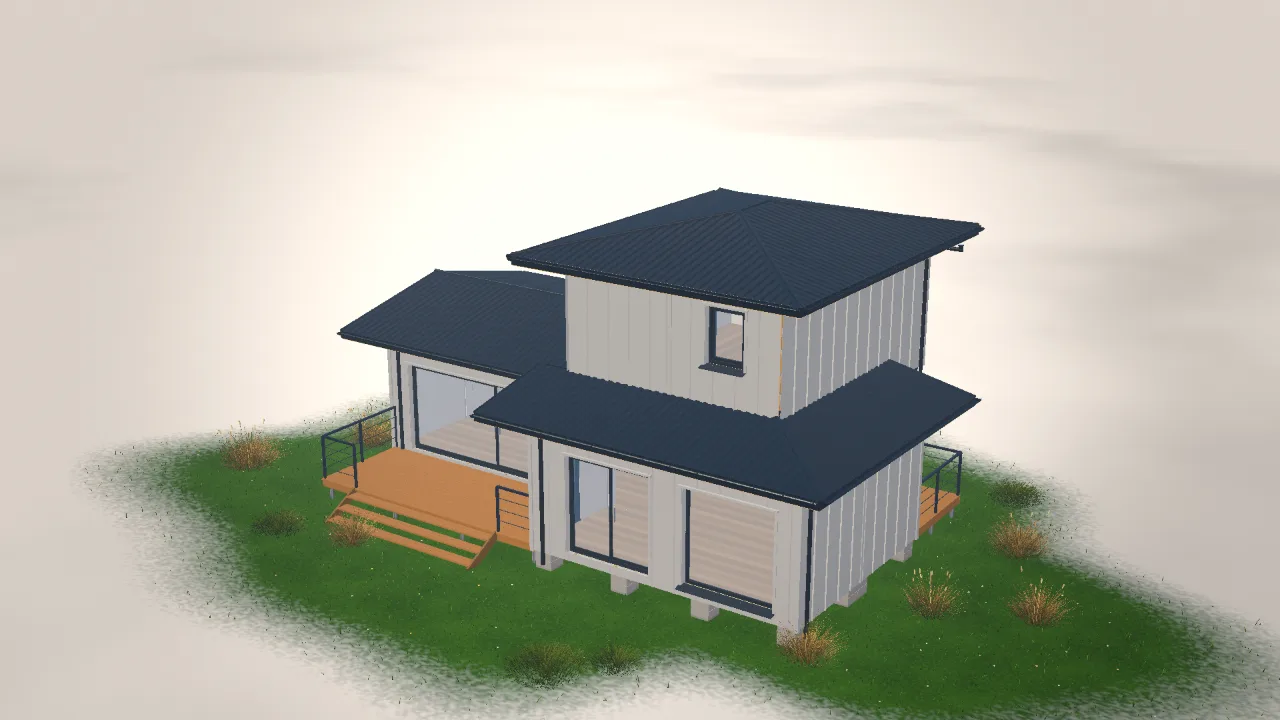
“A container costs a few thousand, so the house will be cheap” is the most common mistake. The box is only the shell. Most of the money goes into what turns it into a home.
What goes into the price
- Containers. New (“one-trip”) or used, standard or High Cube. Used ones are cheaper but may need rust repair and cleaning.
- Delivery and crane. Often underestimated: a truck with a crane or a separate crane on site, plus access roads.
- Foundation. Screw piles or concrete piers under the corner castings are usually enough — much less concrete than a regular house.
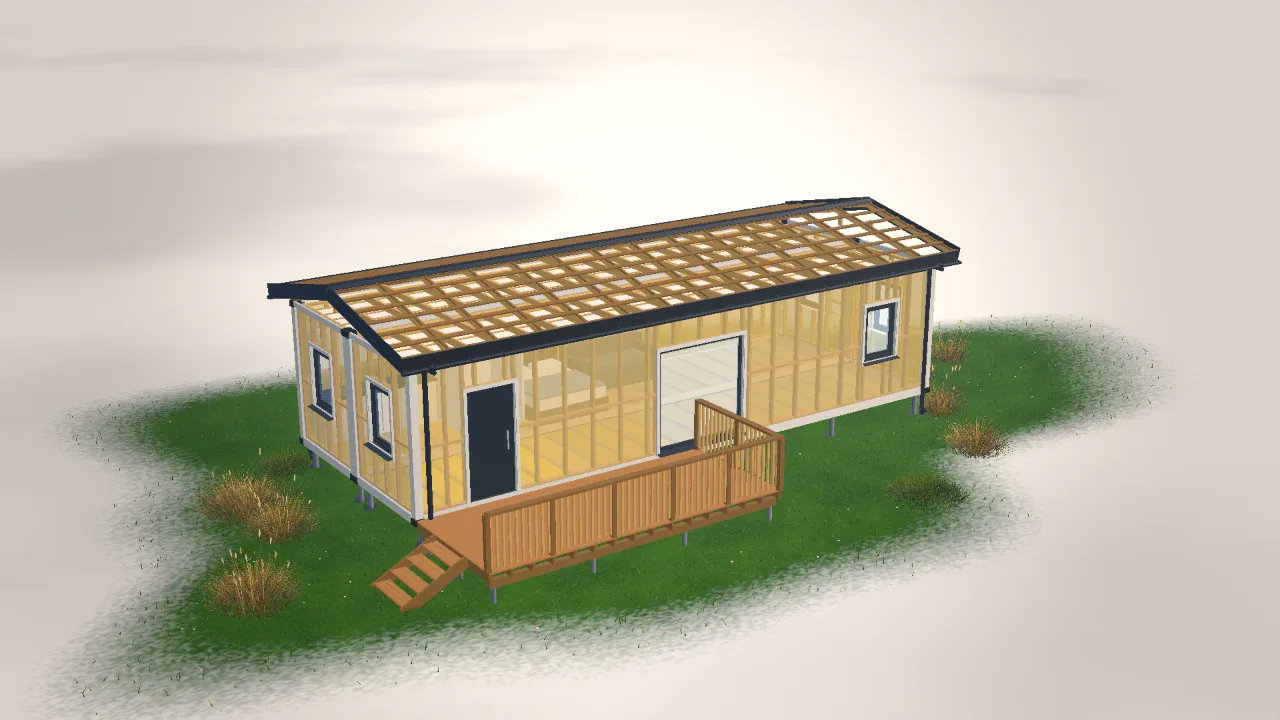
- Cutting and reinforcement. Every opening and every joined wall needs a steel frame to restore the strength of the box.
- Insulation and lining. Walls, floor and ceiling; the thicker the insulation, the higher this line.
- Windows and doors. Often one of the biggest items, especially large glazing.
- Roof. A container roof works as is, but a pitched or flat roof on top protects from heat and water.
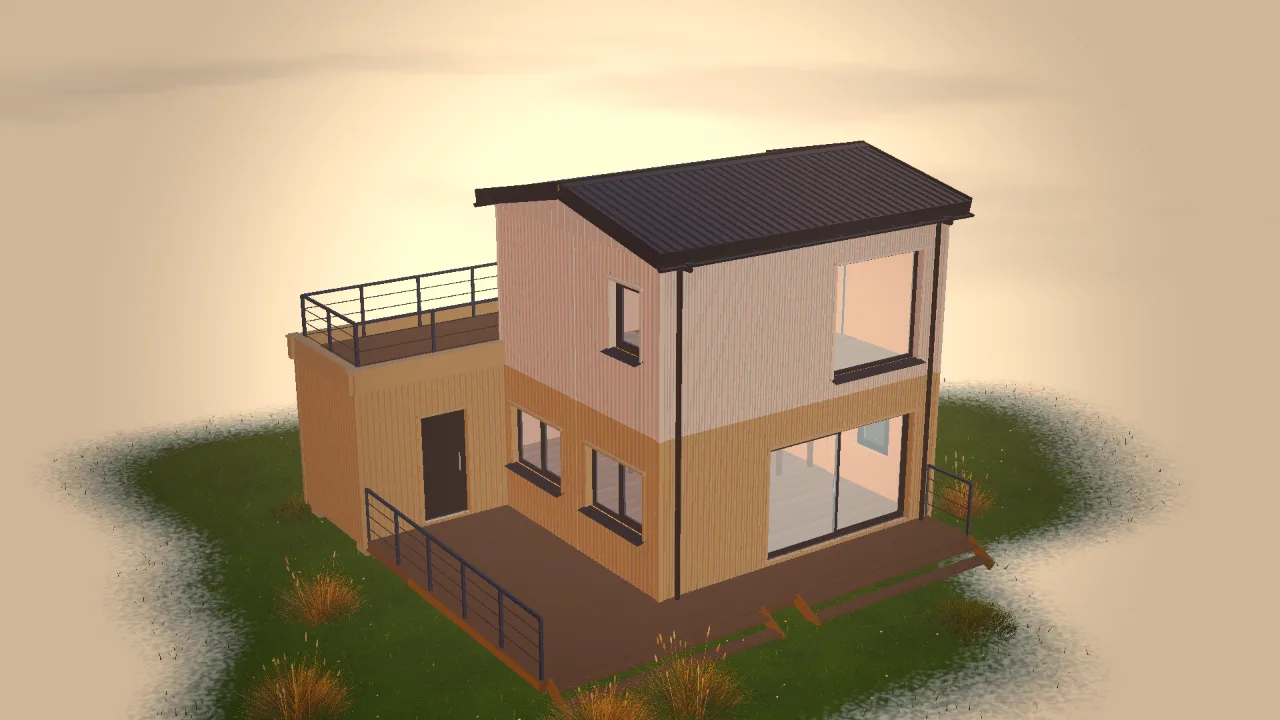
- Facade. Keep the corrugated steel and paint it, or clad it with boards, metal or panels.
- Utilities. Wiring, water, sewage, heating, ventilation.
- Interior and labour. Finishes, kitchen, bathroom, and the work of putting it all together.
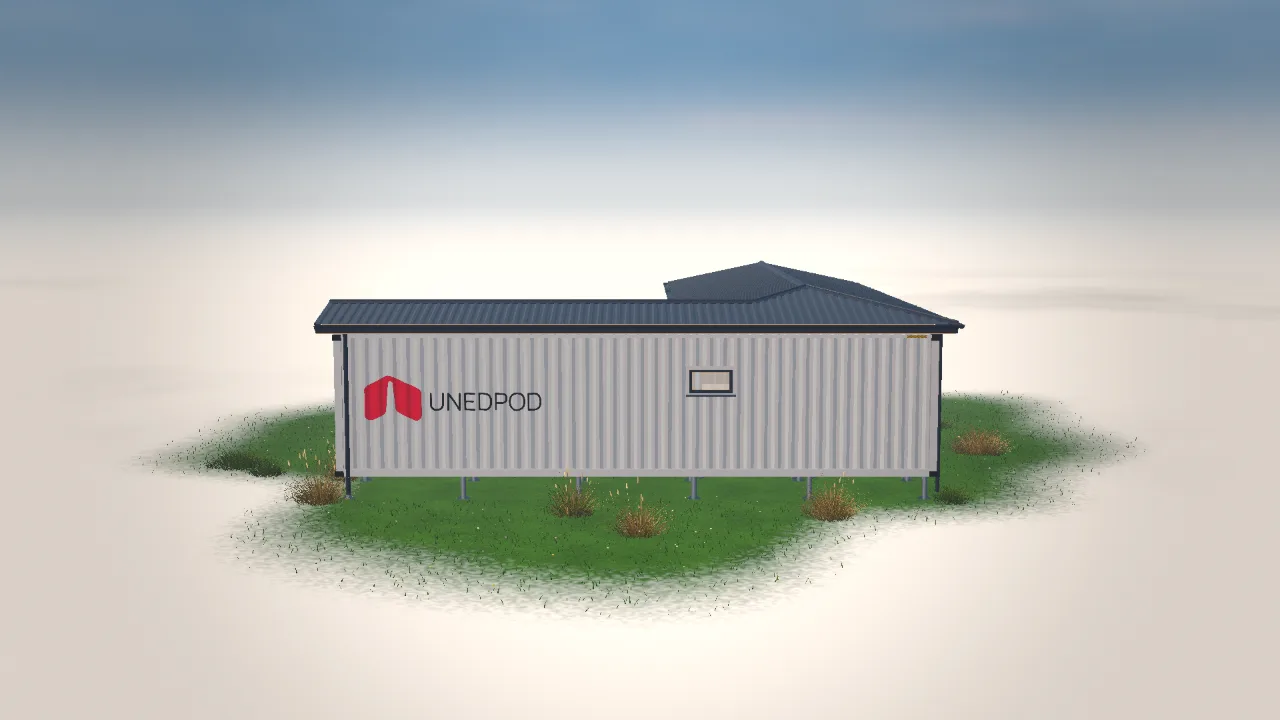
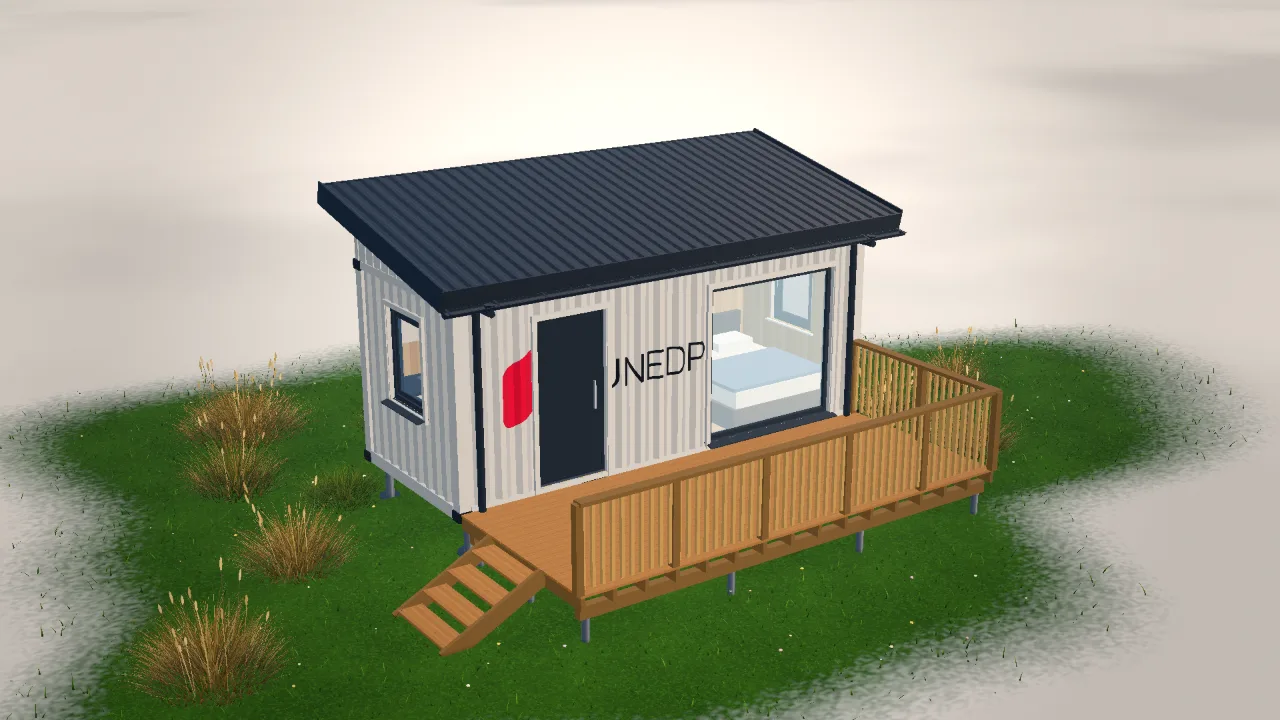
Try it in 3DOpen this house in the free configurator — change it and get the estimate and drawings.
Open in 3D →Why two similar houses cost differently
The number of openings, the amount of glass, the type of facade and the climate (insulation thickness) change the total far more than the number of containers. A house with large sliding doors in every module can cost much more than a bigger house with ordinary windows.
How to get a realistic estimate
In the UnedPod configurator the estimate is built from your actual design: every window, metre of insulation, batten and sheet of cladding is counted. You can switch between materials-only and materials-with-labour, set your own price list and see how each decision changes the total.