 UnedPod
Off-grid container home: solar power, water and wastewater
Container homes are often built where there is no grid: a remote plot, a lake shore, a field far from the road. A compact steel box is a good base for an independent home, but going off-grid is a system, not a single purchase. Power, water, wastewater and heat all have to work together, every day of the year.
Start by using less
The cheapest kilowatt-hour is the one you do not need. Before sizing any equipment, reduce the load:
- Insulate well. Heating and cooling are the largest energy users in most homes. See insulating a container home.
- LED lighting and efficient appliances.
- Avoid electric resistance heating for space and water where another source is available.
- Shade the windows in summer so you need less cooling.
Then list every appliance with its power and hours of use. That daily total is the basis for the whole system.
Solar power
A typical off-grid electrical system has four parts:
- Solar panels on the roof or on a ground frame.
- A charge controller that manages charging.
- A battery bank that stores energy for the night and cloudy days.
- An inverter that makes household AC power from the batteries.
Size the system for the darkest month, not for summer. Many off-grid homes add a backup generator for long cloudy periods. A container roof is flat and strong, but panels mounted on it need a frame that does not puncture the roof, and a pitched roof over the containers can be oriented toward the sun. Battery systems need a ventilated, frost-protected place and correct installation; electrical rules differ by country, so have the system checked by a qualified electrician.
Water
- Well or borehole: the most reliable source where groundwater is available. It needs a pump, a pressure tank and frost-protected pipes.
- Rainwater harvesting: gutters lead to a storage tank through a first-flush filter. For drinking, the water needs filtration and disinfection, and in some places the use of rainwater is regulated.
- Delivered water: a tank refilled by truck, often as a backup.
In cold climates, every pipe outside the heated volume must be buried below the frost line or heated. The space under a container on piles is exposed to frost, so plan where pipes enter the house.
Wastewater
- Septic tank with a drainage field — the common solution. It needs suitable soil, distance from wells and access for emptying.
- Holding tank — emptied regularly by truck where infiltration is not possible.
- Composting toilet — no water for flushing; greywater from the shower and kitchen still needs treatment.
Rules for septic systems and distances to wells and plot borders are local. Check with your local authority before you choose a place on the plot.
Heating and hot water
A wood stove is a classic off-grid heat source; it needs a proper insulated chimney and fire-safe clearances, which in a steel box deserve extra care. A heat pump is efficient but needs a strong power supply. Solar thermal collectors or a wood stove with a water jacket can heat water. Whatever you choose, a container home needs controlled ventilation — read container home condensation.
Plan the house around the system
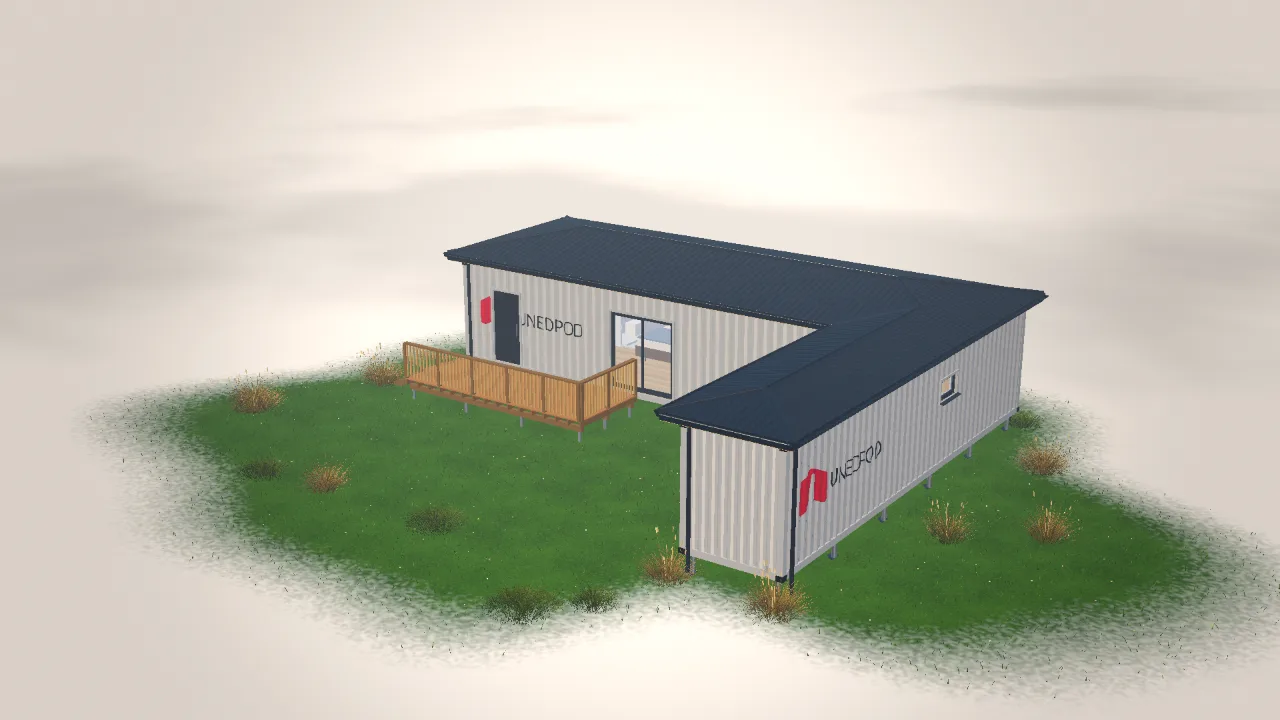
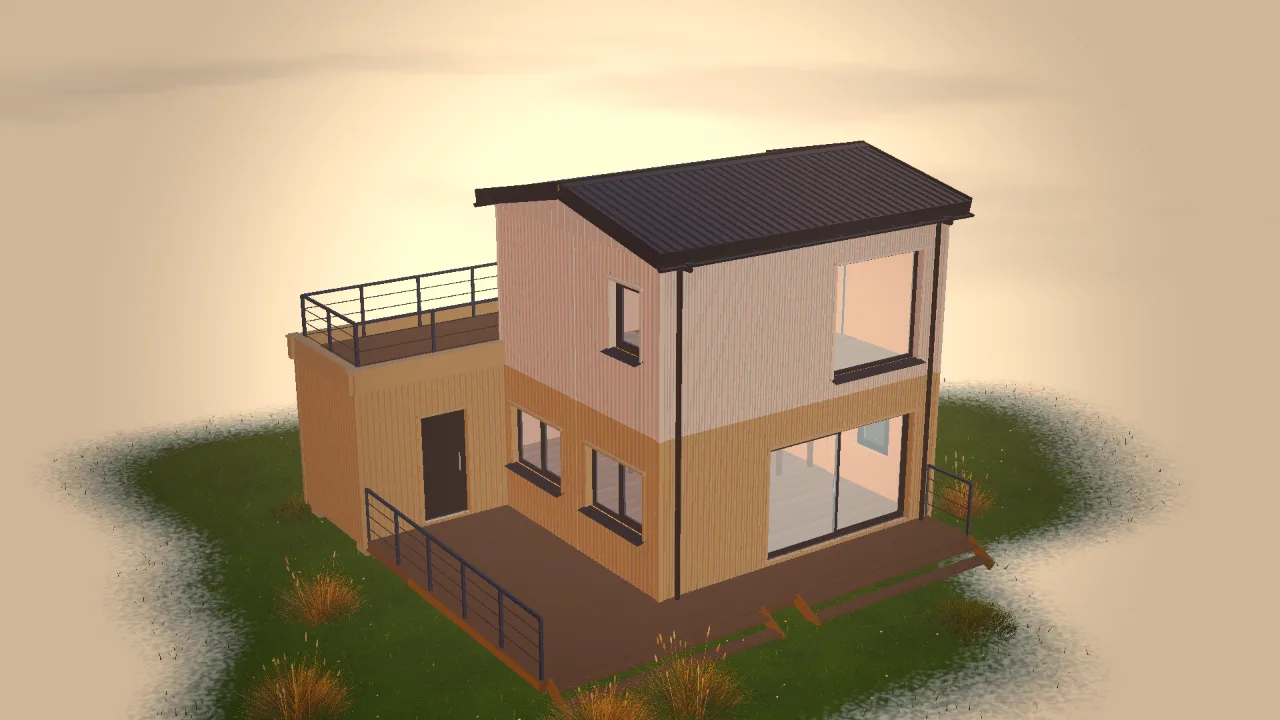
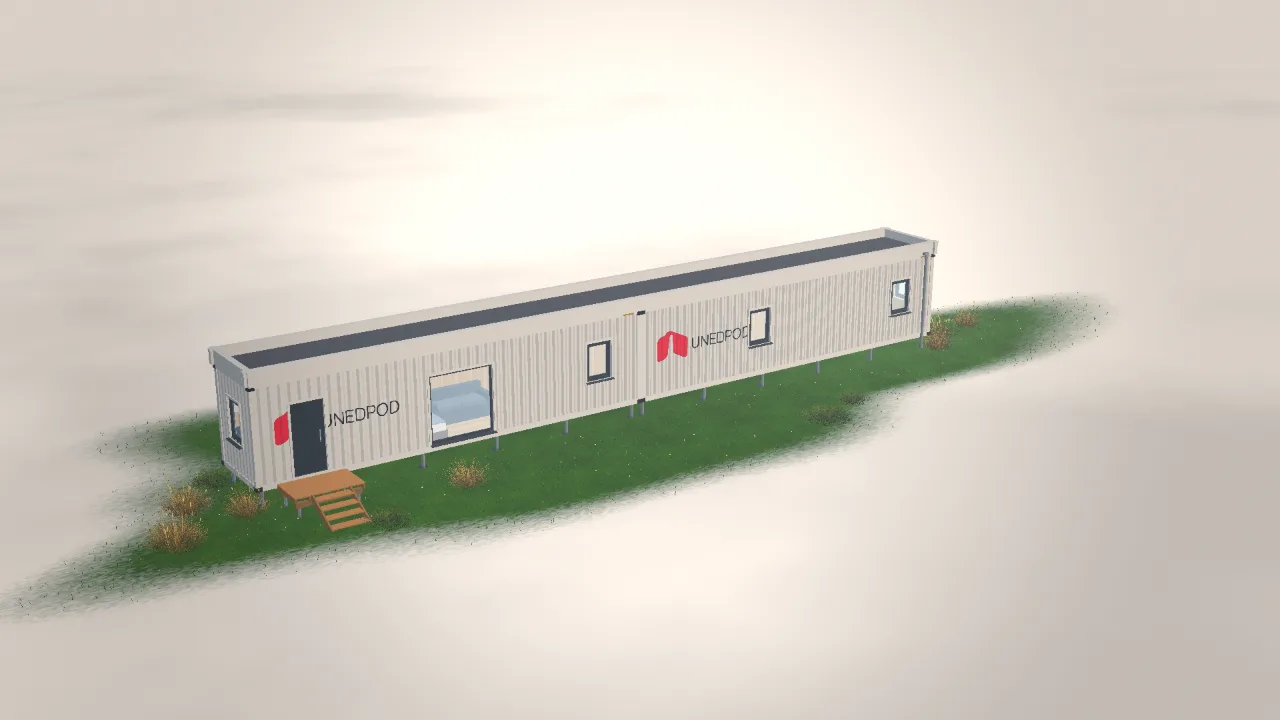
In the UnedPod configurator you can design the house that the off-grid system will serve: place containers on piles or supports, choose a roof shape and direction for the panels, add insulation to walls, floor and ceiling, and lay out lighting and electrical points. The detailed estimate lists the building materials, and the PDF drawings with plans, facades and sections help when you discuss the system with installers.