 UnedPod
Container home condensation: why steel sweats and how to stop it
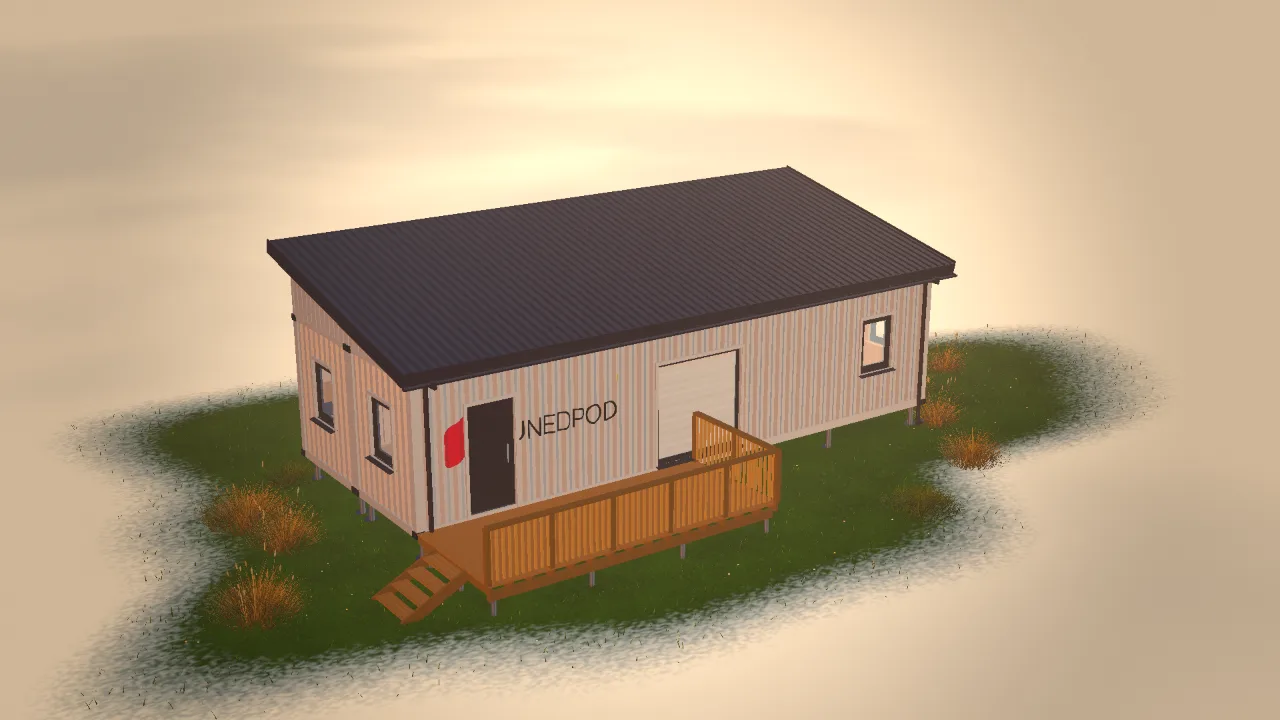
Steel does not breathe and does not store heat. On a cold night the walls of a container quickly drop to the outside temperature. Warm, moist air from cooking, showers and breathing meets that cold steel and turns into water. Uninsulated containers can drip from the ceiling. In a finished home, the same water can collect unseen behind the lining.
Condensation is the most common problem in container homes, and also one of the most predictable. It comes down to three things: keep the steel warm, keep moist air away from it, and remove moisture from the rooms.
Why containers sweat
- Dew point. Air holds less water as it cools. When it touches a surface colder than its dew point, water appears on that surface.
- Thermal bridges. The steel frame, corner posts and cross members conduct cold right through any insulation that only fills the gaps.
- Airtight shell. A container is almost sealed. Moisture produced inside stays inside unless you ventilate.
- A small volume. A few people in a small room raise the humidity fast.
Insulation that touches the steel
The key rule: no air gap between warm, moist air and cold steel. Any cavity where room air can reach the corrugated wall will eventually collect water. Common approaches:
- Closed-cell spray foam applied directly to the steel follows the corrugation and leaves no cavity.
- Rigid boards with every joint taped and the gaps against the corrugation filled.
- Mineral wool in a frame works well when combined with a continuous vapour control layer on the warm side.
- Outside insulation under new cladding keeps the whole steel shell warm and removes most thermal bridges.
Read more on materials and thicknesses in insulating a container home.
Vapour control on the warm side
With fibrous insulation, a vapour control layer goes on the room side, behind the lining. Its job is to stop moist room air from moving into the insulation and reaching the steel. It only works if it is continuous: tape the overlaps, seal around sockets, pipes and window frames. A torn membrane behind a kitchen is a typical source of hidden damp. Which membrane and in which order depends on climate — check with a local specialist.
Do not forget the floor and the roof
- Floor. The steel cross members under the plywood are cold. Insulate between floor joists and protect the underside from wind and splashing water.
- Ceiling. Warm air rises, so the roof is where condensation shows first. Insulate it at least as well as the walls.
- Roof on top. A ventilated pitched roof over the container keeps rain and direct sun off the steel and lets air move above it. See container home roof types.
Ventilation removes the moisture
Even a perfect shell needs fresh air. Plan for:
- Extract fans in the bathroom and above the cooker, ducted outside.
- Fresh air inlets — trickle vents in windows or wall vents, so the extract has something to replace.
- Mechanical ventilation with heat recovery in cold climates, where opening windows wastes heat.
- Opening windows on opposite walls for cross ventilation in mild weather.
Signs to watch for
- Water on window glass every morning.
- Dark spots in corners, around window frames and near the floor.
- A musty smell behind furniture standing against outer walls.
A simple hygrometer helps. If indoor humidity stays high for days, ventilate more.
Check the build-up in UnedPod
In the UnedPod configurator you choose insulation for the walls, floor and ceiling separately, pick the facade and roof, and see each layer of the wall, floor and ceiling in the panel and in the PDF section drawings. Windows can be placed on opposite walls for cross ventilation. The detailed estimate shows how much insulation and membrane the design needs.