 UnedPod
Soundproofing a container home: rain, footsteps and street noise
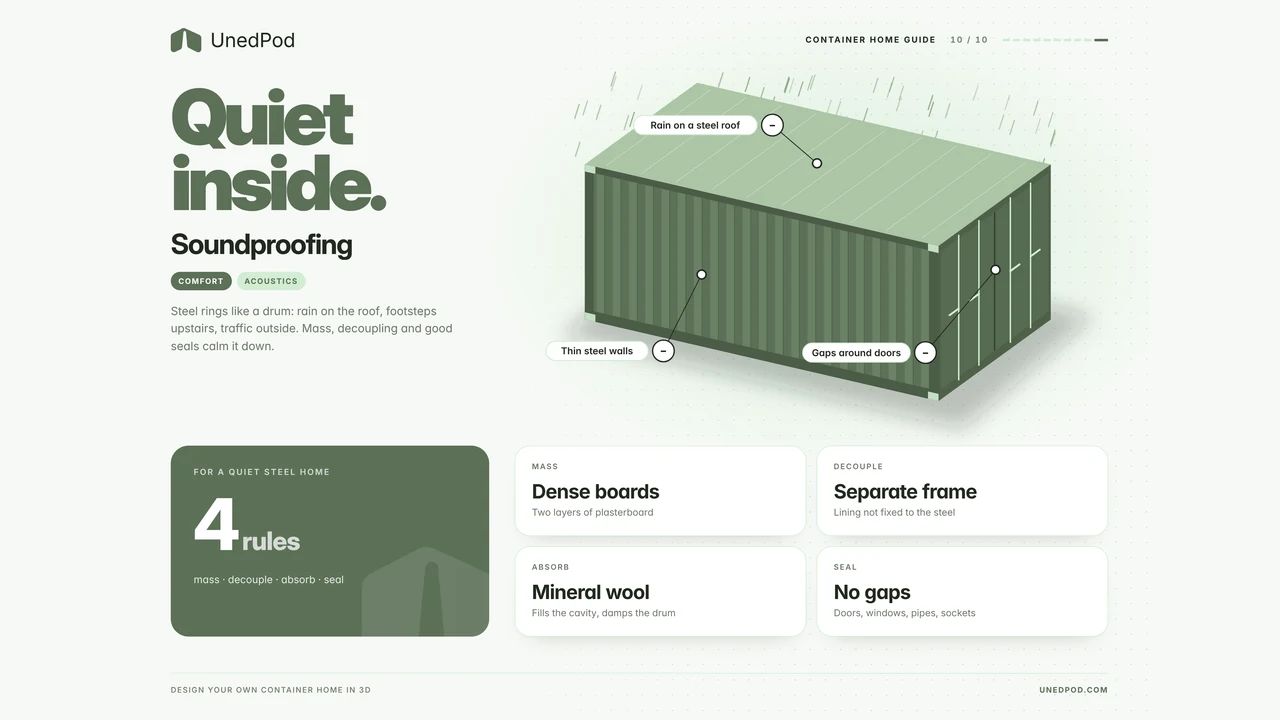
An empty container rings like a drum. Rain on the roof, footsteps on the upper floor and traffic outside all pass easily through thin corrugated steel. The good news is that the same layers that keep a container home warm can also make it quiet — if they are built the right way.
Four rules of sound insulation
- Mass. Heavy, dense layers block sound. Two layers of plasterboard stop more noise than one.
- Decoupling. Do not fix the inner lining straight to the steel. A separate frame or resilient fixings stop vibration from travelling through.
- Absorption. Mineral wool in the cavity damps the drum effect. It insulates against heat at the same time — see insulation.
- Sealing. Sound goes wherever air goes. A small gap around a door or pipe can undo a well-built wall.
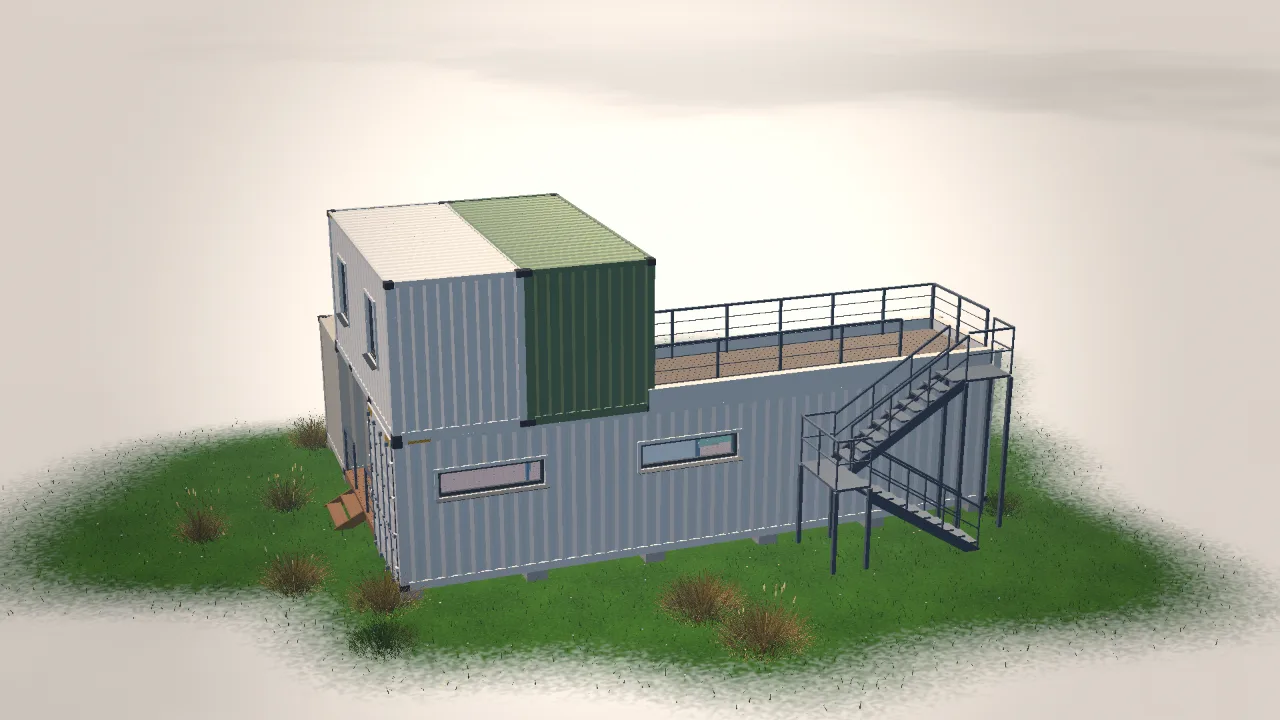
Try it in 3DOpen this house in the free configurator — change it and get the estimate and drawings.
Open in 3D →Rain on the roof
Rain noise is the most common complaint. Ways to reduce it:
- An extra roof over the container with an air gap — the rain hits the new roof, not the steel ceiling. See roof types.
- Insulation and a heavy lining on the ceiling inside.
- Insulation sprayed or fixed on the outside of the container roof, under a protective layer.
Between floors and rooms
- Two-story homes: a floating floor upstairs — a resilient layer under the subfloor — reduces footstep noise. See two-story container homes.
- Partitions: fill stud walls with mineral wool and use two layers of board on the bedroom side.
- Doors: solid doors with seals are much quieter than hollow ones.
Street noise
- Windows are the weak point: choose double or triple glazing with good seals, and laminated glass for noisy streets.
- Seal around window frames carefully — see windows and doors.
- Ventilated cladding outside adds another layer between the street and the steel.
Do not trap moisture
Extra layers must not create cold, closed pockets where moisture can condense on the steel. Keep the vapour control layer continuous and ventilation working — see condensation.
In the UnedPod configurator you can see every wall, floor and ceiling layer, add an extra roof and partitions, and check the build-up in the section drawings before construction.