 UnedPod
How to paint a shipping container and stop rust
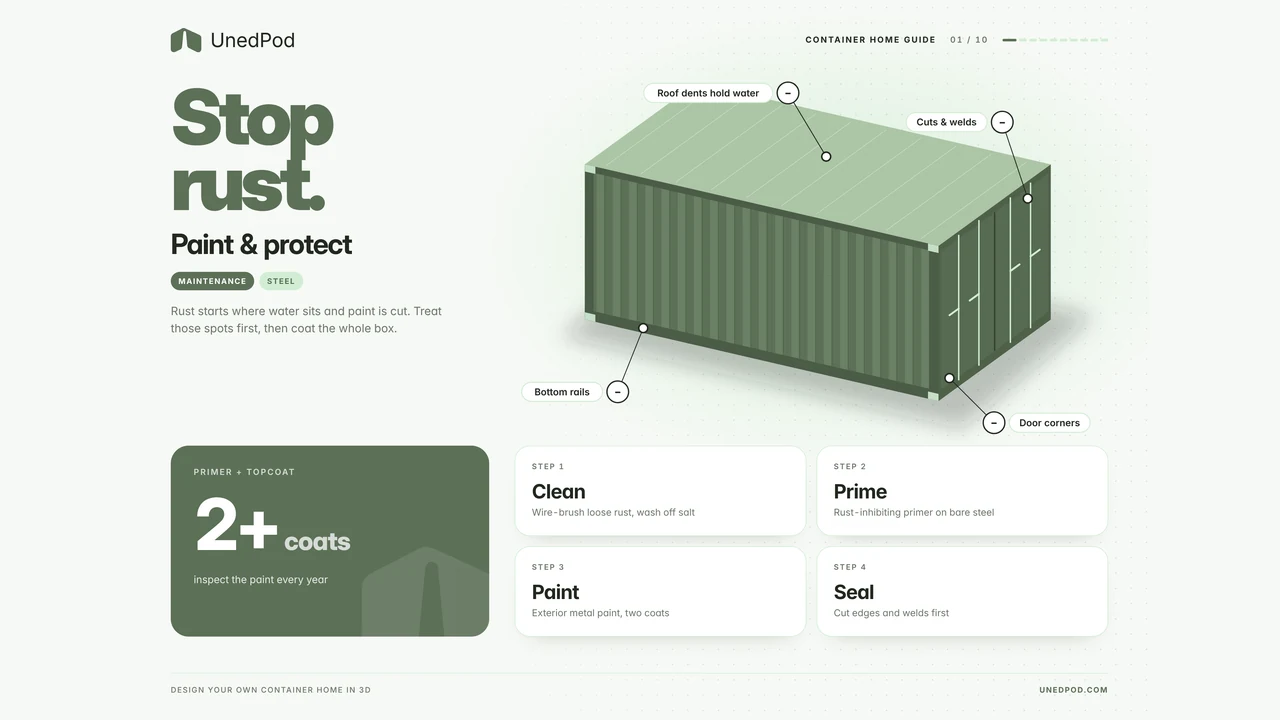
A shipping container is made of weathering steel, and it arrives with a tough marine paint. That coating has already crossed oceans, so most containers show scratches, dents and spots of rust. On a home, rust is not a disaster, but it never stops on its own. The job is to catch it early and keep water from sitting on bare steel.
Where rust starts
- The roof. Container roofs are thin and often dented. Every dent becomes a puddle, and standing water is the main cause of rust on the top.
- Bottom rails. The lowest part of the side walls collects dirt, leaves and splashes from the ground.
- Door corners and hinges. Moving parts and seals trap moisture.
- Cuts and welds. Every new window or door opening exposes raw steel. Weld seams are rough and hold water.
Step 1: clean
Remove loose rust and flaking paint with a wire brush, a grinder with a flap or wire wheel, or by blasting. Wash off salt and dirt with clean water — salt left under new paint keeps working. Let the steel dry completely.
Step 2: prime
Bare steel needs a rust-inhibiting primer made for metal. Prime the same day you clean, before a new film of rust forms. Pay most attention to cut edges and welds: brush the primer into the corners instead of only spraying.
Step 3: paint
Use an exterior paint made for metal and follow the maker's instructions for the number of coats and drying time. Two coats over the primer is a common minimum. Light colours reflect more sun and keep the steel cooler — useful in hot climates, see container homes in hot climates.
Step 4: seal the details
- Seal joints around new window and door frames.
- Fill or slope the roof so water runs off, or cover it with a new roof — see roof types.
- Lift the box off the ground on a proper foundation so the bottom rails stay dry and ventilated.
Do not forget the inside
Rust can also start from the inside when warm, humid air meets cold steel. Good insulation and ventilation stop that — read about condensation before you close the walls.
How often to check
Walk around the house once a year, after winter. Look at the roof, the bottom rails, the corners and every seal. Touch up small spots right away; a small repair today saves a large one later.
In the UnedPod configurator you can choose the container colour from the RAL palette, or cover the steel with cladding and see how the house looks before you buy paint.