 UnedPod
Container home in a hot climate: shade, ventilation, insulation
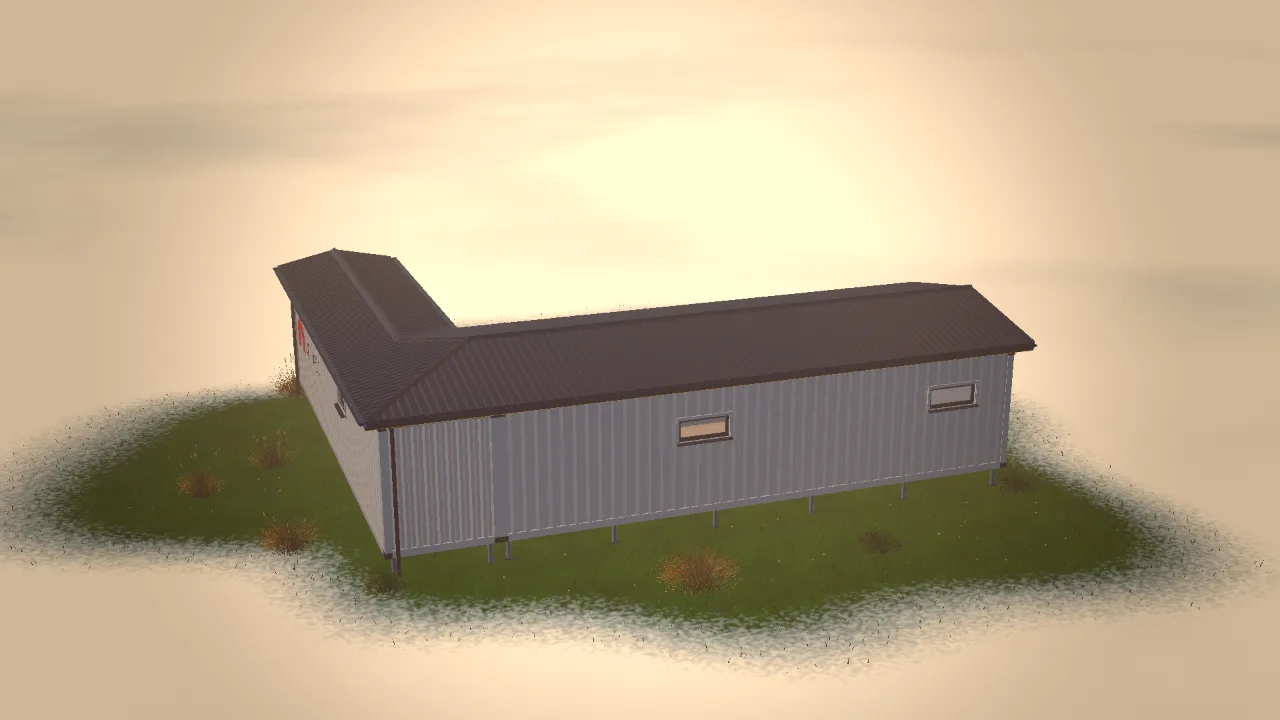
A dark steel box standing in full sun heats up fast. The roof and walls absorb solar radiation and pass it straight inside, and without protection the interior can become hotter than the air outside. In a hot climate, a container home has to be designed to keep heat out first and remove it second.
The tools are simple and old: shade, colour, insulation and moving air.
Shade the roof first
The roof gets the most sun. The most effective step is a second roof above the container with an air gap under it.
- The upper roof takes the direct sun; the air in the gap carries heat away before it reaches the container.
- Overhangs shade the top of the walls and the windows.
- A pitched or single-slope roof also deals with heavy seasonal rain.
A flat roof or a roof terrace works too, but it needs good insulation under the membrane, and a light-coloured finish. Compare options in roof types for container homes.
Light colours
Surface colour matters a lot on steel. White and light grey reflect much more sunlight than dark grey or black, so the metal stays noticeably cooler. If you love a dark facade, put it on a ventilated cladding layer rather than directly on the container.
Insulation still matters
Insulation is not only for winter. It slows the flow of heat in both directions and makes air conditioning far more efficient.
- Outside insulation with ventilated cladding keeps the steel out of direct sun and is very effective in heat.
- Inside insulation works, but the hot steel sits right next to the layer, so choose enough thickness and seal it well.
- Insulate the ceiling or roof most of all.
In hot and humid climates, moisture often moves from the humid outdoors toward the cooled interior. The right position of the vapour control layer then differs from cold climates. Ask a local designer before choosing the wall build-up. Our article on condensation explains the basics.
Orientation and outdoor shade
- Place the long walls facing the directions with the least low sun, where your site allows it.
- Keep large glazing out of the strong afternoon sun, or shade it.
- Covered terraces and canopies along a wall create cool outdoor space and shade the wall itself.
- Trees and planting around the house help, as long as they do not block the breeze.
Ventilation and windows
Moving air removes heat and moisture. Windows on opposite walls give cross ventilation; a high opening lets warm air escape at the top. Some window types are especially useful:
- louvre windows ventilate a lot and keep out rain;
- awning (top-hung) windows can stay open during a shower;
- sliding doors open a wall to a shaded terrace.
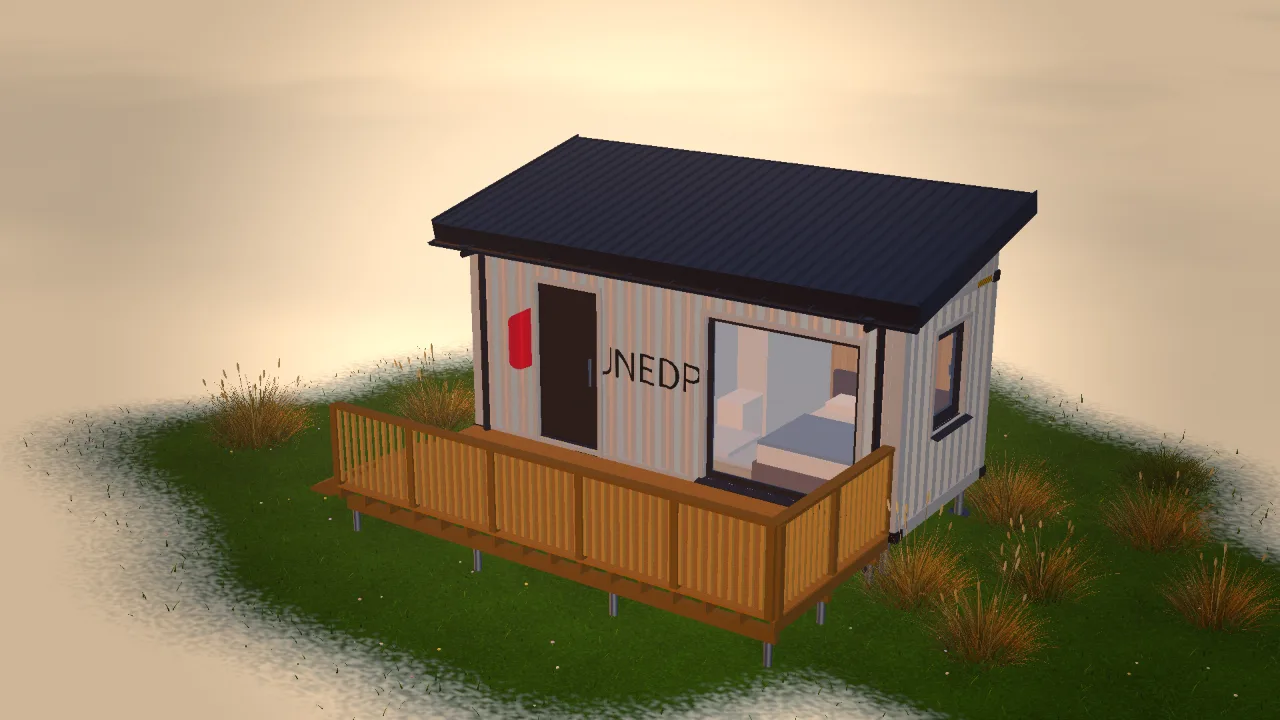
Add insect screens. For air conditioning, a wall split unit is common; keep the outdoor unit in shade. Raising the container on piers also lets air pass under the floor.
Plan it in the UnedPod configurator
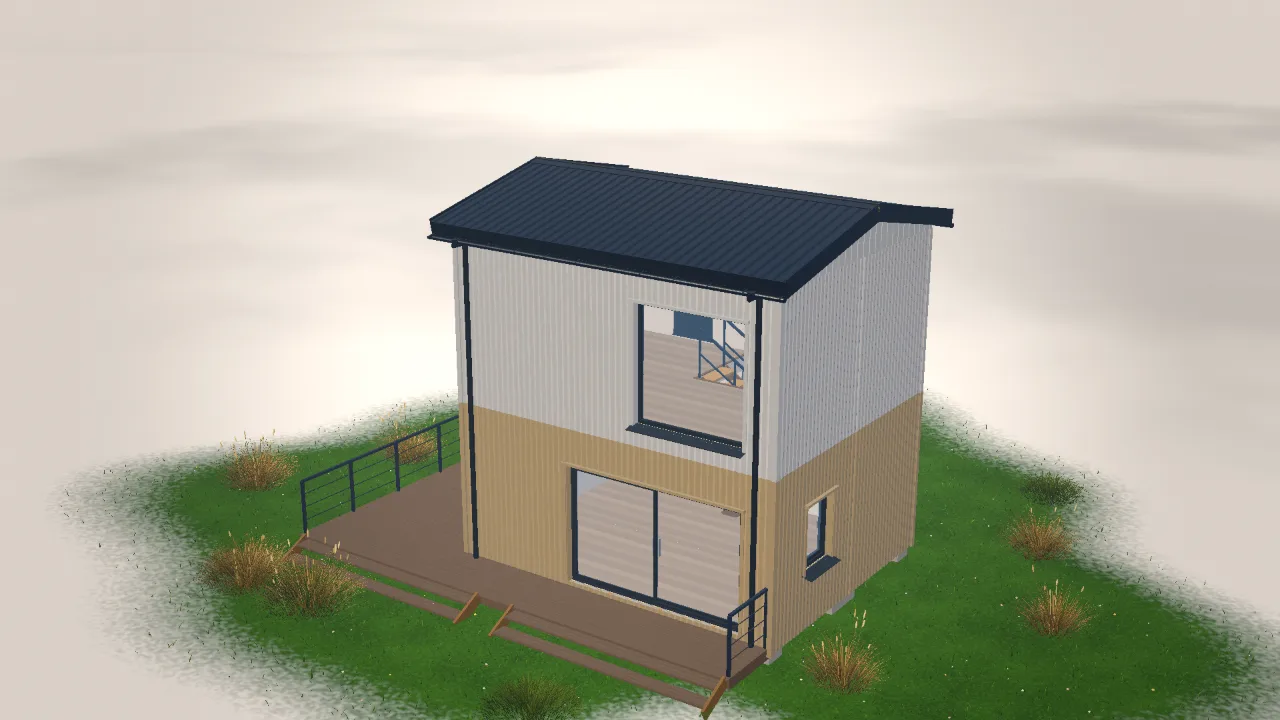
In the UnedPod configurator you can put a pitched, single-slope or hipped roof over the containers, or a flat roof or roof terrace, and choose light RAL colours for the container, cladding and roof. Add canopies and terraces for shade, pick louvre, awning or sliding openings, and set the insulation for walls, floor and ceiling. Walk through the rooms inside, and get a materials estimate and PDF drawings with plans, elevations and sections.