 UnedPod
DIY or prefab container home: build it yourself or buy it finished?
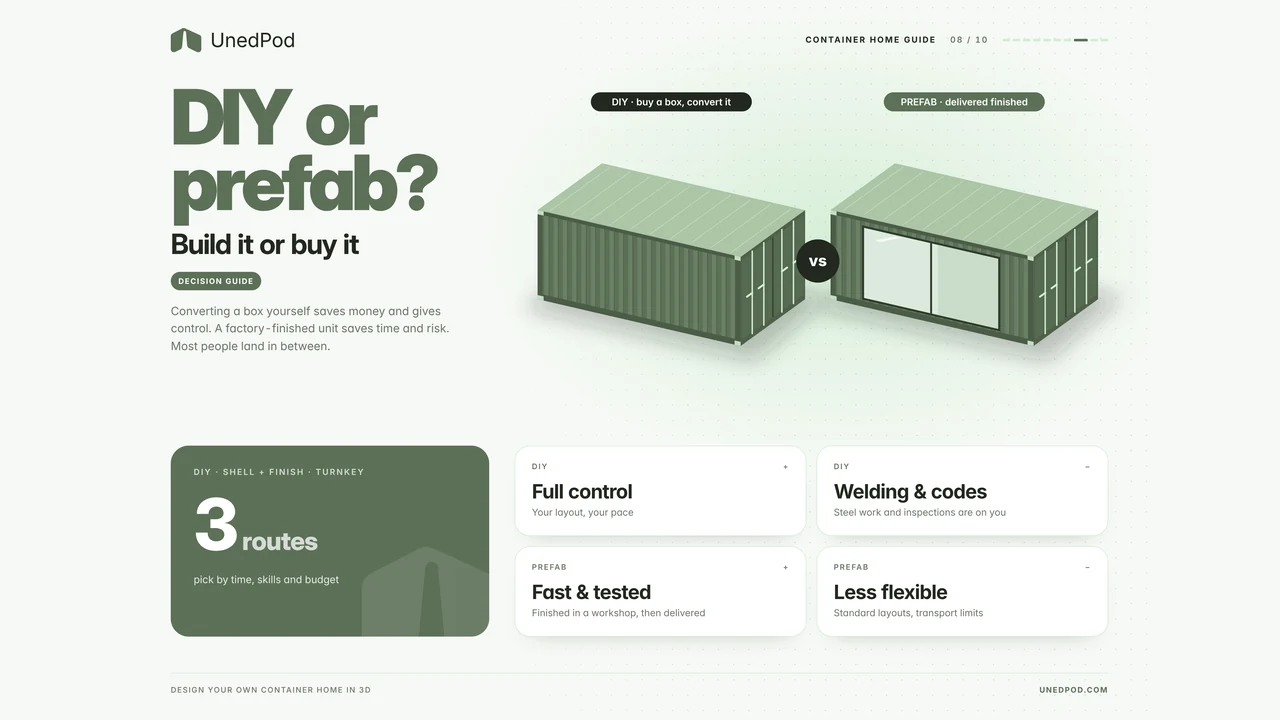
There are three ways to get a container home: convert a box yourself, buy a ready shell and finish it, or order a turnkey unit that arrives complete. The right choice depends less on money than on your time, skills and appetite for risk.
Route 1: do it yourself
You buy a container, have it delivered and do the conversion — or manage the trades who do it.
- Pros: full control over the layout and materials, work at your own pace, you learn how your house is built.
- Cons: steel cutting and welding need real skills and equipment; you are responsible for meeting building codes and passing inspections; mistakes are expensive to undo.
Read first: buying a used container and cutting openings.
Route 2: prepared shell, your finish
A workshop does the steel work — openings, frames, sometimes insulation and windows — and delivers a weathertight shell. You do the interior.
- Pros: the hardest and riskiest work is done by professionals; you still choose and build the interior.
- Cons: less freedom to change openings later; you need a clear design before ordering.
Route 3: prefab, delivered finished
The house is built and finished in a workshop and arrives ready to connect.
- Pros: fastest on site, built in controlled conditions, often a tested design.
- Cons: standard layouts with limited changes; transport and crane access must allow a finished unit; in some regions factory-built homes follow a different approval route — see permits.
How to choose
| If you… | Consider |
|---|---|
| have steel and building skills, and time | DIY |
| want to do the interior but not the welding | Prepared shell |
| need a house quickly with minimum risk | Prefab |
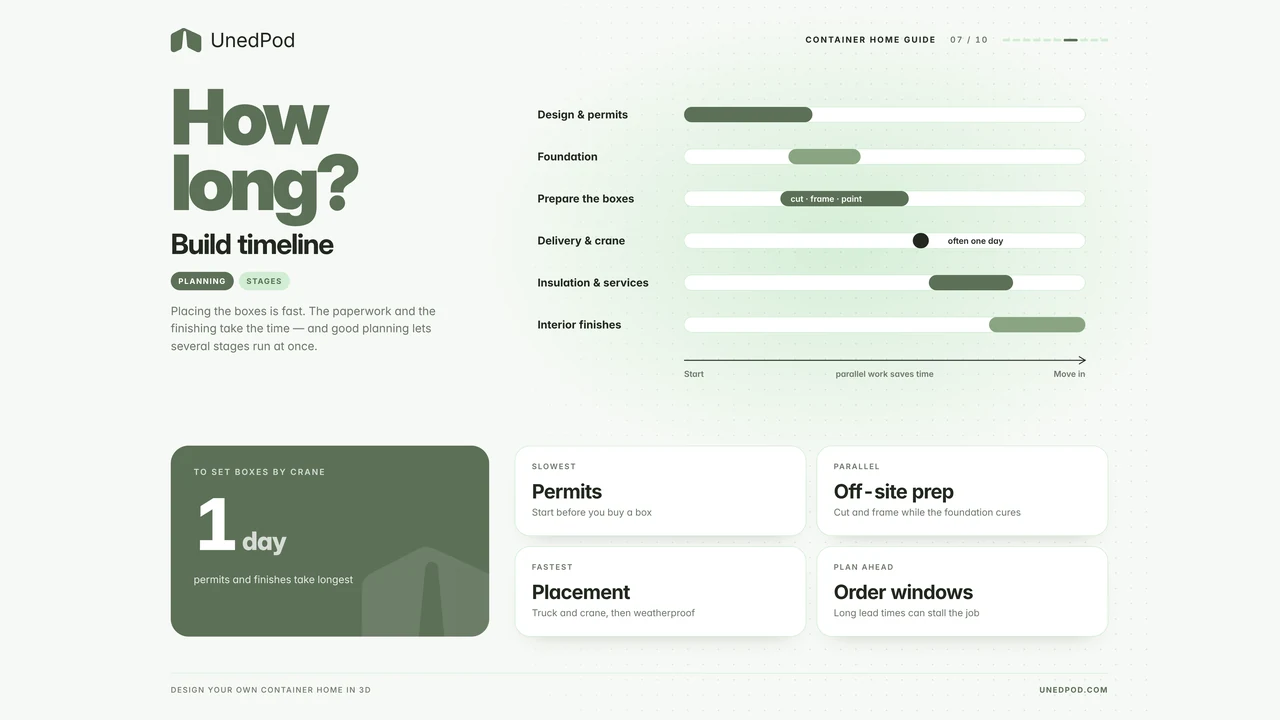
Whichever route you take, start with a clear design. In the UnedPod configurator you build the house in 3D, get plans, elevations and a materials estimate — a good brief for a workshop or for your own build. See also how long it takes.